
The Artist’s Family: A Conversation with Marie and Jim Rose, Daughter and Grandson of Leon Kroll
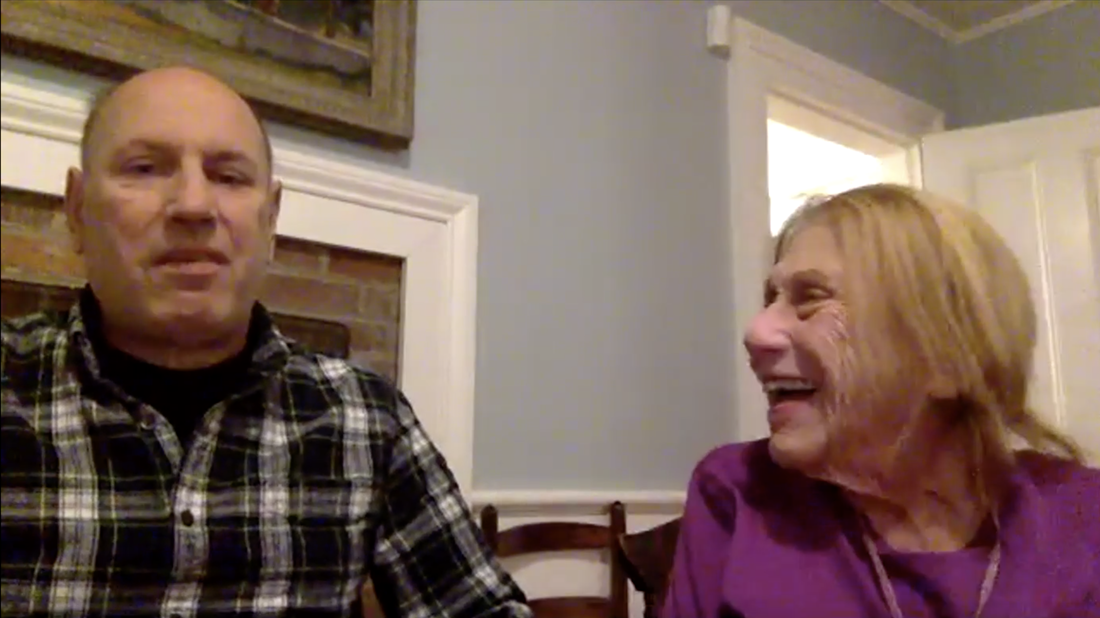
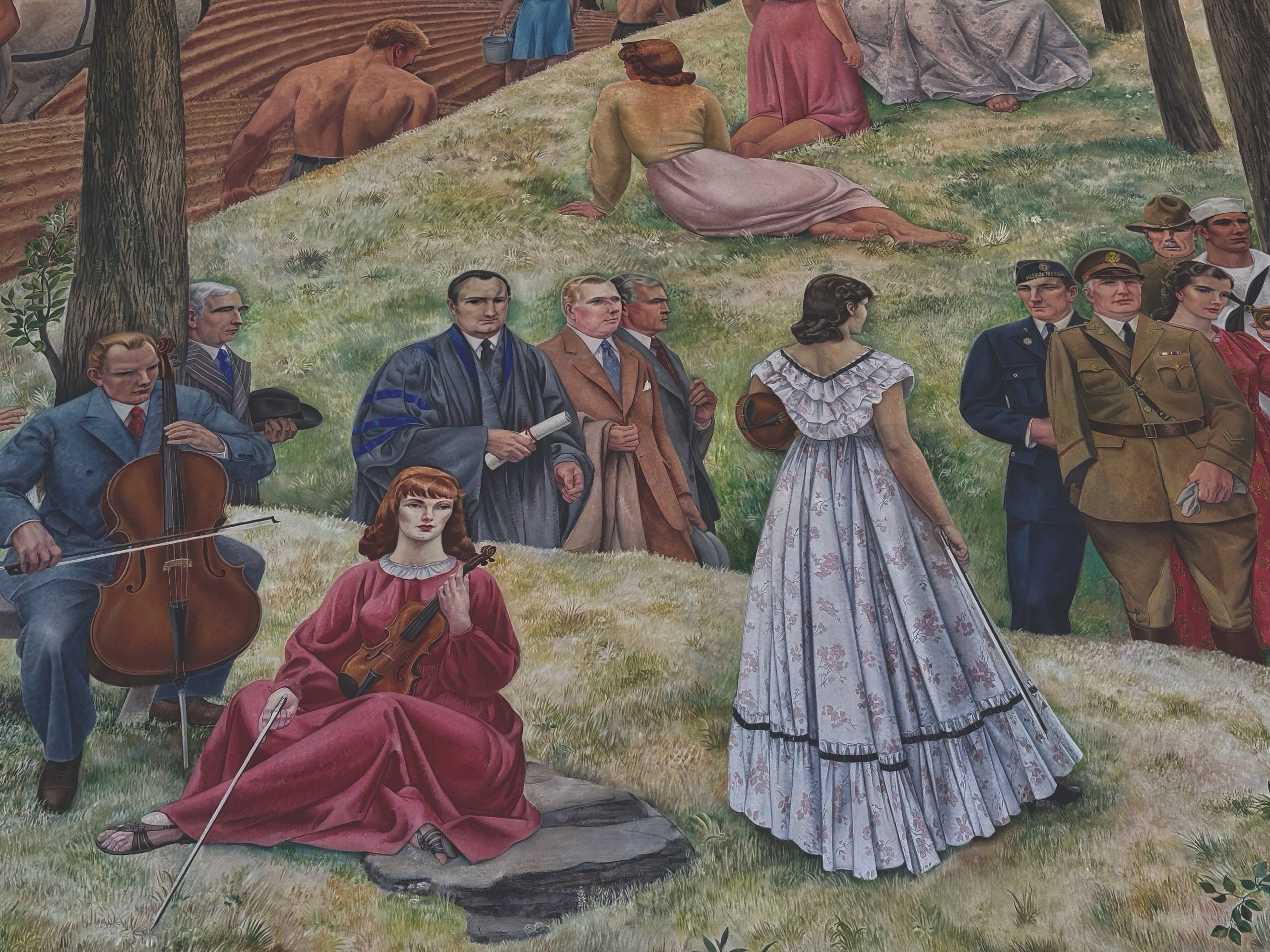
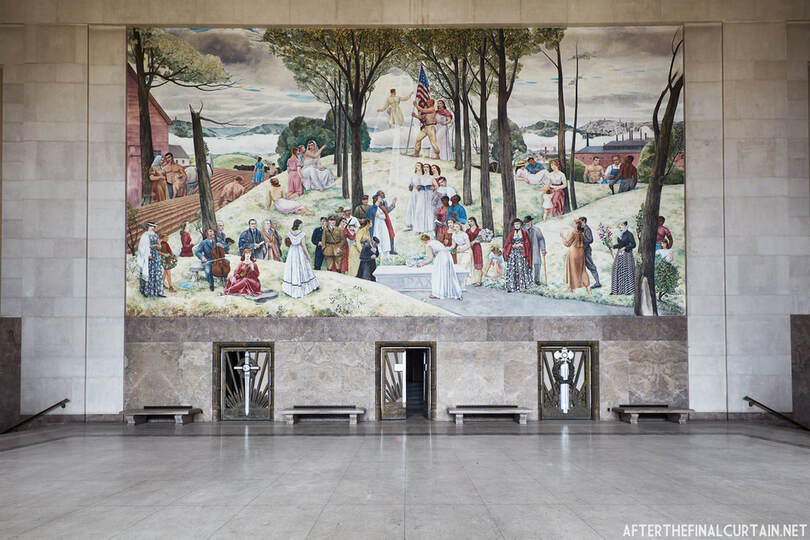
To enter the Shrine of the Immortal at the Worcester Memorial Auditorium is to step into a breathtaking display of devotion. Devotion to the young men and women who sacrificed their lives in a war far from home; devotion to the public and its need to grieve their loss; and above all, devotion to art and its power to heal. The marbled memorial hall echoes with the memories of Worcester’s sons and daughters, whose names are etched in gold on the walls beneath three towering murals painted by renowned artist Leon Kroll. Completed two decades after “the war to end all wars” at the outbreak of a still more terrible conflict, the murals depict in vivid colors scenes of combat and peace, and the everyday heroism of Worcester’s citizenry.In November 2020, AHF staff sat down over Zoom with Kroll’s daughter and grandson, Marie and Jim Rose, to learn more about the artist’s life and work. At 91 years young and with a keen sense of humor, Mrs. Rose is a treasure trove of memories: of a childhood spent in artists colonies during the Great Depression, of her mother Genevieve’s strong influence on her father’s career, of WWII’s impact on her family, and, crucially, of her experience living in Worcester while her father painted the Aud’s murals. Where Mrs. Rose’s recollection faltered, her son Jim affably filled in the gaps and provided some of his own perspectives. The following is an edited and abridged version of the interview.
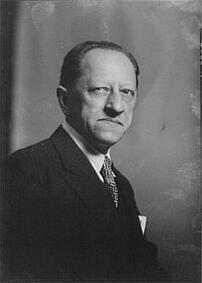
Leon Kroll. Portrait by Arnold Genthe.
MR: He was born in New York. I knew my grandmother, but my grandfather died before I was on the scene. My grandmother was a lovely lady, she was always doing either knitting, crocheting, or doing embroidery. So that might have influenced my father.Your father was the child of immigrants?
JR: Yes, from Poland –
MR: Well, now it’s Poland. But then I believe that it was Prussia. Because the name Kroll means “king” in Polish, but they spoke German.What was the path that he took to developing into a young artist?
MR: Apparently, he was constantly drawing and seemed to enjoy doing it. Luckily, when he was in high school, he had to take German. Of course, they spoke German at home, so he really didn’t need it, but the German teacher and he did not get along, and he punched the German teacher! They were ready to throw him out of the school. But the principal liked him and said, “Okay, you don’t have to take German anymore, but that will be a free period in which you will have to draw and paint.” So that was great for him! He was happy!
JR: He loved drawing, and eventually that drew the attention of C.Y. Turner – he was the president of the Art Students League of New York. Turner was a very well-known murals painter, which undoubtedly inspired my grandfather early in his career. My thought is that [my grandfather] used some good, old-fashioned salesmanship to land an internship with Turner. From meeting Turner, he began his artistic education at age 16 when he enrolled at the course of John Henry Twachtman at the Art Students League of New York. Two years later, at age 18, he entered the National Academy of Design.What influenced your father’s artistic style during those years?
MR: It was strongly influenced by the French Impressionists, because he also managed to get himself a scholarship to L’Academie Julian in Paris. I think he spent about two years there [before WWI]. He was absolutely taken by [Paul Cezanne’s] paintings. And he was also strongly influenced by Pierro della Francesca.